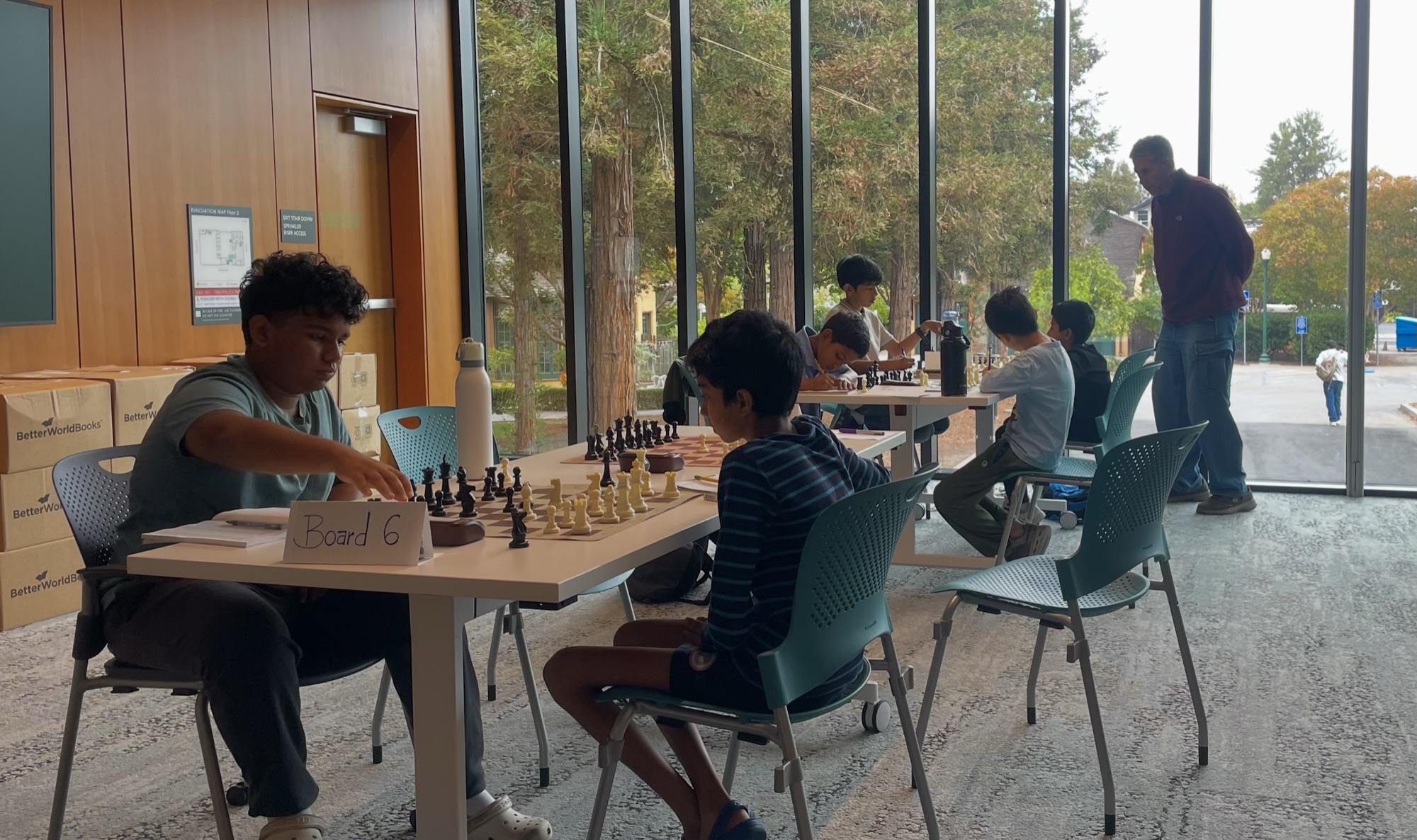
Three words that mean different things.
A scholastic tournament is for students. A rated tournament reports played games for a rating. A beginner event is designed for less experienced players. One event can be all three.
| On the flyer | What it tells you | What to check |
|---|---|---|
| Scholastic | School-age or grade-based eligibility. | Allowed grades, school/team rules, and whether it is rated. It does not mean everyone is a beginner. |
| US Chess rated | Played games are submitted to US Chess, often still called USCF. | Membership, rating system, section rules, and event procedures. |
| Unrated / casual | These results will not change an official US Chess rating. | It can still use clocks, touch-move, entry fees, and trophies. |
| Open | Often an all-ages event or the section without an upper rating limit. | Read the event’s meaning. Children may face adults. |
For a first outing, look for an event that explicitly accepts unrated beginners, has a manageable schedule, and explains where families wait. Ask: “My child knows the moves but has never played a tournament. Which section would you recommend?”
Find a tournamentTry a local club firstMembership is not tournament entry.
Think of US Chess membership as the player’s federation membership. The event entry reserves a place in one particular tournament.
- Check for an existing US Chess ID.
If a school, coach, or earlier event enrolled your child, renew that ID. An expired membership does not mean your child needs a second identity.
- Join or renew for the child who will play.
For most US Chess-rated events, that player needs current membership. Check the organizer’s instructions for any exception or included membership. You do not need a playing membership just to accompany your child.
- Register for the actual event.
Select the child, check their name and ID, choose a section, enter school details if requested, and pay the event’s entry fee. Confirm any extra state-association or club requirement.
US Chess membership, a Chess67 account, and your local club’s dues are separate things. Read what is included instead of assuming one payment covers all three.
Join or renew US ChessAllow time before the event: Chess67 submits membership requests to US Chess within 24 hours; activation can take longer. For an imminent tournament, check the organizer’s instructions before paying.
On Chess67, parents can add a child profile and register their children from their own account. Check the participant before confirming a purchase.
Membership helpRegistration helpRead the flyer before choosing a section.
Read a flyer, one term at a time
Made-up event for explanation. This is not an event you can enter.
- Format
- 4-SS · G/30; d5
- Section
- K–5 U600 · unrated players welcome
- Rating
- US Chess rated
- Schedule
- Check-in 8:30–9:00 AM · first round 9:30 AM
Four scheduled rounds
SS means Swiss system. Your child normally keeps playing after a loss. This example has four rounds; a bye or withdrawal can mean fewer played games. Check the round times on the flyer.
Also check all round times, the rating cutoff date, entry fee, refund deadline, equipment, and the expected finish. Never work out pickup time from the clock setting alone.
Under 600 is about rating; K–5 is about grade. Your child must meet both when both are listed. For a new player, look for “unrated welcome” or ask the director where to enter. Do not enter an online rating into a US Chess rating field.
National scholastic events use specific rules for ratings, grade eligibility, and school teams. Those rules change by school year. Check the current regulations for nationals and the organizer’s rules for a local event.
More about the Swiss systemA rating estimates playing strength.
It is based on results against other players. It is not a school grade, an IQ score, or a prediction of how far your child can go.
Unrated means there is not yet a usable rating for the relevant system or event rules. It does not mean a rating of zero. A confident online player can still be new to US Chess over-the-board ratings.
A rating needs games behind it
8 games: provisional
With 25 or fewer rated games, the estimate is still provisional. Early changes can be large. Some events use a published rating list or special unrated-player rules, so ask which section to enter.
This shows rating status, not a predicted rating or section eligibility. Byes and forfeits are not played rated games.
Explore a rating estimateOver-the-board means playing face-to-face on a physical board. US Chess has separate Regular, Quick, and Blitz ratings, with separate online systems too. The event’s time control determines which ratings apply. The latest result and the monthly rating list used for section entry can differ; the flyer should say which one counts.
Tournament points are not rating points
Change the results in this four-round example. A win earns 1, a draw ½, and a loss 0.
A 2½/4 score does not mean a 250 rating. The rating calculation also considers opponents and earlier results. Trophy order may use the event’s announced tiebreaks.
See how tied scores are separatedLose a game? There is usually another round.
In a Swiss tournament, a loss does not knock your child out. Players are generally matched with others on similar tournament scores, while the director also handles colors, repeat opponents, and byes.
Confirm the player and section. Find the waiting area and listen to announcements.
Find your child’s name, board number, and White or Black assignment.
Follow the event’s method. Check that both players agree.
Snack, use the toilet, and be ready when the next round is called.
Board 12 · White: Maya · Black: Leo
If your child is Leo, they play Black at board 12. Board 12 is a location, not their ranking. A new board and opponent may be assigned next round.
A bye is a round without a scheduled game. A pairing bye and a requested absence can earn different points. Check the event’s rules and request deadlines. If you must leave early, tell the director before the next pairings; do not simply go home.
Expect to stay for the advertised schedule even if the first game finishes quickly. Parents are often asked to wait outside the playing room. Arrange a meeting point and supervision between rounds.
Practice these five things at home.
- Think first, then touch.
Deliberately touching your own piece normally commits you to moving it if a legal move exists. Touching an opponent’s piece can require a legal capture. Ask the director about a dispute.
- Move, then press the clock.
Use the same hand for the move and the clock. Practice with the event’s actual delay or increment setting.
- Ask the director for help.
If a rule problem happens, stop both clocks and raise a hand. The child should ask during the game, rather than waiting to tell a parent afterward.
- Keep moves when required.
Ask whether notation is required in the child’s section and time control. Practice writing moves beforehand; exceptions depend on the rules.
- Let the players play.
No hints, gestures, analysis, or engine checking during a live game. Follow the event’s phone and spectator rules, even when a parent is only trying to help.
Try a short practice game with a clock, no takebacks, and a pretend result report. Aim for familiarity rather than perfect play.
Find help preparing for a first eventAsk about the game before the number.
“Was there a moment you enjoyed?” is a better first question than “How many rating points did you win?”
After a difficult loss, give your child time and a snack before reviewing moves. Choose one useful lesson later. Winning a trophy and having a good first tournament are different goals.
Ratings appear after the organizer submits results and US Chess processes them. Timing varies. If an event or result is missing, contact the organizer with the player ID, section, and round.
Keep the scoresheet if your child wants to review it. Chess67’s Scoresheet Scanner can help turn written moves into a game you can replay; check the moves before relying on the scan.
Plan the next eventReview a scanned gameBefore you leave home
Ticks are not saved. Print the page or take a note for the day.
Check membership optionsFind the right first tournamentDoes my child need a rating before entering?
Many events accept unrated players. Membership can be needed before the first rated game; an existing rating usually is not. Check which section the organizer assigns to new players.
Does scholastic mean my child must be on a school team?
Not necessarily. Many scholastic events accept individual students. Team awards may have separate school-eligibility rules. Check the specific event, especially for national championships.
Can I stay beside my child?
Ask the organizer in advance. Many scholastic events limit spectators in the playing room. Discuss any access or support needs with the director before the day.
Sources & further reading
Examples are labeled. Event rules and venue policies vary; use the organizer’s current information for your own plans.
- US Chess: current scholastic regulations
The current 2026–27 national regulations and annual changes. Local events can have different section and team rules.
- US Chess Official Rules, revised January 2026
Free rulebook chapters covering play, touch-move, clocks, notation, assistance, and tournament procedures.
- US Chess rating specification, April 6, 2026
Separate rating systems and the definition of an established rating: more than 25 games in that system.
- US Chess: information for new members
Membership, member IDs, and getting started with rated play. Check current options rather than old price lists.
- U.S. Chess Center: parent tournament guide
A practical account of pairings, breaks, withdrawals, and the parent’s role. Its older prices and event-specific procedures are not universal rules.
- Chess in the Schools: tournament questions
An organizer’s example of preparing students for their first tournament and checking section requirements.
- A Guide to Scholastic Chess, 11th edition
Background on school clubs, family support, and scholastic events; published in 2021.