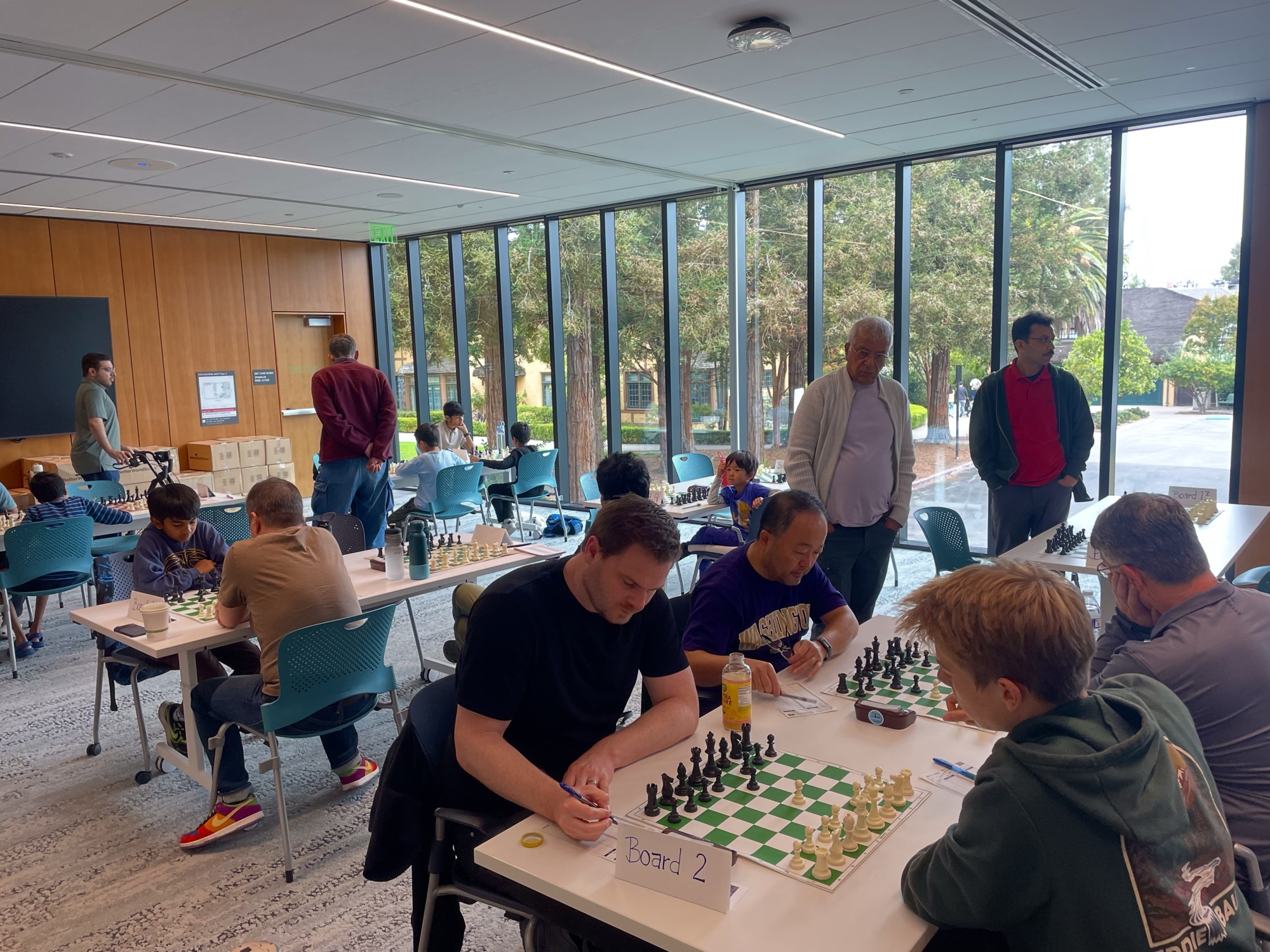
Start with one good meeting.
Choose who it is for, when it happens, and what a first-time visitor will do. You can add a league later.
Two Saturdays. Six boards. One host.
Try a 10–11:30 AM library meetup for 12 players. Bring six sets and a spare, give one volunteer the welcome job, and offer an optional 15-minute lesson. If people ask for a repeat, confirm the next two dates before expanding.
In Charlotte Chess Center’s published casual-night example, equipment and optional teaching are included. A newcomer knows what they are walking into. Borrow that clarity for your own event.
Create a public Chess67 club page with the actual meeting time, cost, ages, equipment, and a photo of the entrance. Then publish the first event. Avoid making visitors search social posts for the address.
Create your club pagePublish the first eventFind a room you can use again.
A reliable room at the right time is more useful than an impressive room you can only afford once.
Try a venue conversation
Choose a type of room. Use the questions when you visit.
A quiet, free first meetup
Ask whether collecting dues, charging entry, and advertising a recurring club are allowed. A free room can have rules that rule out a paid event.
Could we try two Saturday afternoons, with space for 16 players and one welcome table? We’ll bring sets, handle setup, and leave the room as we found it.
Bring a full-size board and clock to the visit. Sit on both sides of the table. Check elbow room, glare, toilets, step-free access, parking or transit, and the closing time. Include setup and cleanup in the booking.
For children, agree on supervision, pickup, safeguarding, and where parents wait. Confirm any venue requirements before advertising. For rated play, ask an experienced tournament director to review the room.
Frank DelBonis describes using schools, universities, cafés, and community spaces to keep venue costs down. The useful question is what the host receives: student activities, a quieter night with customers, or a community program. Agree on the exchange rather than assuming space is free.
Watch the venue discussion →Count costs before promising prizes.
Price for the attendance you can reasonably expect. Include the people who help you run the event.
Will this meeting cover its costs?
A simple USD planning example. Replace every number with your own estimate.
Each paid entry leaves $8.00 toward fixed costs. Break-even = fixed costs ÷ that amount, rounded up.
Include room hire, staff, equipment, awards, processing fees, refunds, and a cushion where they belong. Count complimentary places in room capacity, but only paid entries as income. Put any costs for complimentary players in the fixed-cost total. Enter your own taxes and payment fees; they are not calculated here.
Check your club’s payment feesA free social meetup and a paid tournament can serve different jobs. Keep the entry-level meetup affordable; charge separately for a staffed lesson or rated event when the costs justify it. Tell people exactly what their dues include.
Capablanca’s webinar example combines regular classes and Friday events in its membership. If you try a bundle, count instructor hours, room capacity, and included entries before setting the price. Start with one clearly described offer.
Set up membership groupsOffer family pricingSee Chess67 pricingHelp beginners find their first game.
“Beginners welcome” should describe what happens when someone walks through the door.
- Put a host by the entrance.
“Have you played before? Would you like a quick introduction or a game?” works better than asking for a rating.
- Make the first opponent a good match.
Introduce a patient regular by name. Ask whether the newcomer wants pointers during play or afterward. Keep a teaching board away from games that need quiet.
- Offer something small to learn.
Teach checkmate with a king and queen for ten minutes, then let people play. A two-hour opening lecture is a difficult first visit.
- Explain the next visit before they leave.
“We’re back next Saturday at 10. Sets are here; you can come alone.” Share the event link and ask whether they want reminders.
Prospect Park’s FAQ answers the questions newcomers actually have: whether they need equipment, can arrive late, or can just watch. Add those answers to a short “Your first visit” page.
Add a first-visit pageHelp a family try tournament chessAsk about real choices.
A survey is useful when the answers can change next month’s calendar.
Four questions you can actually use
- What would you come for?
Choose up to two: casual games; beginner lesson + games; unrated rapid; US Chess-rated games; family chess.
- Which times actually work?
Offer two or three real slots your venue can provide, plus “none of these.”
- What made it hard to attend last time?
Timing, travel, price, finding a suitable opponent, or something else.
- What would make your next visit easier?
Leave room for a written answer. You may hear about a barrier your choices missed.
In Chess67, use choice questions for formats and available times, and a written question for barriers. Written answers are only shown to organizers. Share the survey link or add its block to a club email.
Then publish the decision: “Saturday morning was the most popular available time, so we’re trying two beginner sessions.” Check attendance afterward. A vote shows interest; it is not a registration.
Share the survey by emailTell members what you choseNotice who returns—and ask who doesn’t.
Use member activity to choose a conversation. A score cannot tell you why someone stopped coming.
In Club Admin, open a member’s record to review the family’s recorded activity and connection history. New families show “New” for their first 30 days. Check the explanation and missing attendance before interpreting a quiet record.
Turn a member signal into an event
Illustrative examples. These are not numbers from a Chess67 club.
Notice: Example: 18 families joined this month, but only 5 came to a second activity.
Ask: Was the timing difficult, or did your child need more help getting started?
Try: Try a Saturday 10–11:30 AM beginners’ session: 15 minutes of instruction, then friendly games with a host finding opponents.
Check: Invite the same new families back. Compare how many attend a second time; don’t count all registrations as returning families.
Use member segments and the activity filters your plan provides to find a relevant group. Send a specific invitation: “We’re trying an earlier beginner session on Saturday. Would that work better?” Avoid a generic “We miss you” blast to every inactive member.
Review return-rate charts with their date range and definition. As a separate hand-counted example, 8 of the same 20 first-time families returning is 40%. Twenty new visitors the next month does not answer whether the original families came back.
Read family connection historyUnderstand member groupsRead return-rate chartsGive regulars a reason to return too: a club ladder, a club rating list, or a recurring slow-game night. Keep the beginner table available as you add competition.
Make a local invitation easy to say yes to.
Tell someone where to go, what it costs, and who will help them find a game.
New to chess, or just want an in-person game? We’re meeting Saturday, 10–11:30 AM, in the library’s ground-floor meeting room. Free, sets provided, beginners welcome. Ask for Sam at the welcome table. Children attend with an adult. Details and next dates: [your Chess67 event link].
Inside Chess67
Keep your club location and public events current so people can find them. Give each event a specific title and description. Ask nearby clubs about sharing suitable activities through calendar subscriptions.
Share a join link or QR codeAround your neighborhood
Ask the venue to include the event in its newsletter. Give a school contact or librarian a short paragraph and one link. Share in local Facebook groups and your city’s subreddit after checking their promotion rules.
Post a real room photo so visitors recognize the place. Get permission before using identifiable children’s photos. Reuse the same event link on flyers and social posts; update it when details change.
For Instagram, try a short room walkthrough: the entrance, the welcome table, and a board ready for a new player. Put the next date and time in the caption and the event link in your profile. A photo of the room and “sets provided; come alone” answers more questions than a trophy graphic.
Ask first-time visitors where they heard about you. After four meetings, compare which channels brought people who actually returned. Keep the ones that work before paying to reach a wider audience.
See nearby clubsExplore the club toolsYour launch checklist
Checklist ticks stay on this page while it is open. They are not saved to your club.
Create a chess clubGive a volunteer permission to helpDo I need US Chess affiliation to start a casual club?
A casual meetup does not have to be US Chess rated. Before offering rated play, arrange an eligible affiliate and certified director, check current requirements, and tell players which memberships are needed. Start with the TD guide and share the US Chess membership page with players.
How much does it cost to start a chess club?
The room and staffing usually decide the budget. Get an actual quote, inventory borrowed equipment, and run the calculator above with conservative attendance. A donated room with volunteer hosts is a different plan from a leased room with paid teaching.
Sources & further reading
Examples are labeled. Event rules and venue policies vary; use the organizer’s current information for your own plans.
- US Chess: organizer promotion & finances webinar
September 14, 2026. Venue partnerships: 17:30–20:57; promotion: 21:00–23:45; Capablanca’s membership and feedback examples: 39:50–44:55.
- A Guide to Scholastic Chess, 11th edition
Dewain Barber and contributors, 2021. Useful for welcoming players, equipment, publicity, and sharing the work. Older prices and rules are not used here.
- Illinois Chess Association: starting a chess program
Practical advice about tables, storage, volunteers, and grouping instruction by experience.
- Charlotte Chess Center: Monday Adult Casual
A published 2026 example of free casual play, optional teaching, and supplied equipment. Check their current schedule before visiting.
- Prospect Park Chess Club: newcomer FAQ
A clear example of explaining cost, equipment, late arrival, beginners, and supervision before someone visits.